Screams in the Hallways: The Haunted Ruins of America's Most Notorious Abandoned Medical Institutions
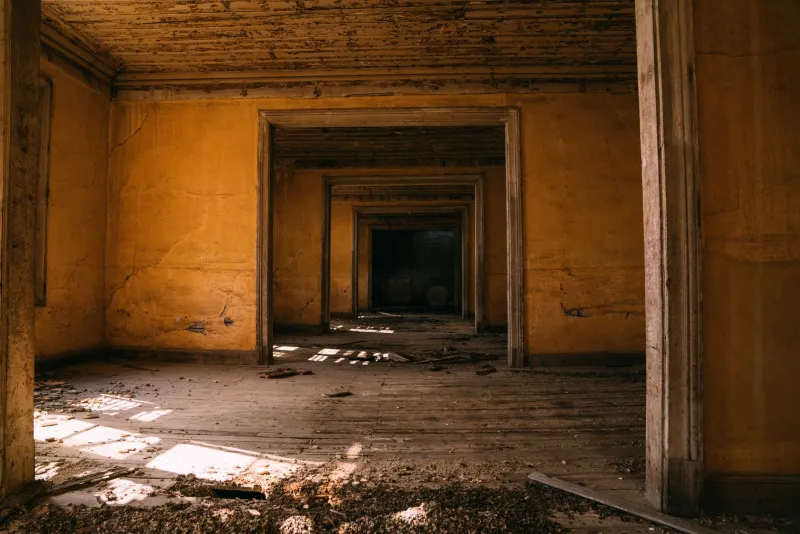
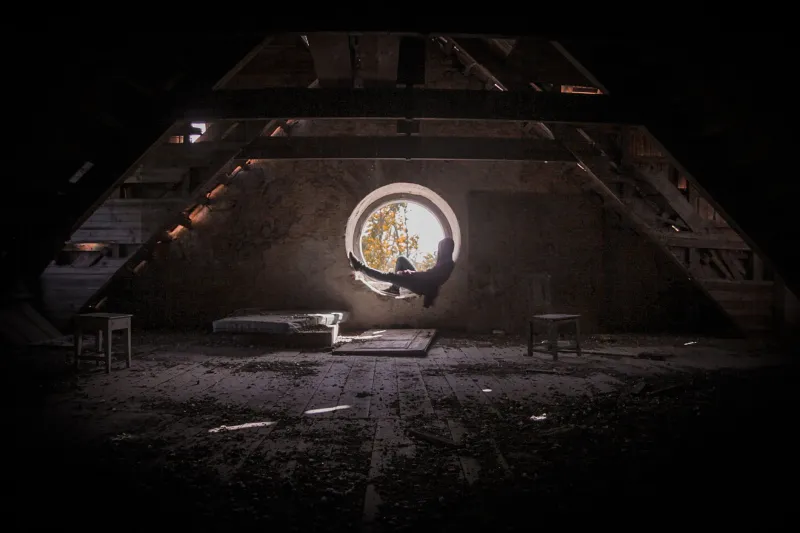
There's a reason paranormal investigators keep coming back to old hospitals and asylums. It's not just the peeling paint, the rusted gurneys, or the way sound moves through an empty ward at 2 a.m. It's the weight of what happened inside those walls — decades of suffering, neglect, and in some cases, outright cruelty — that seems to linger long after the last patients were discharged.
America has hundreds of these places. Many were built during the 19th and early 20th centuries under treatment philosophies we'd consider barbaric today. Overcrowding, lobotomies, insulin coma therapy, indefinite confinement — the histories of these institutions are genuinely disturbing, and investigators who spend time inside them consistently report experiences that don't fit easy explanations.
Here's a look at some of the most notable — and most actively haunted — abandoned medical facilities in the United States.
Trans-Allegheny Lunatic Asylum — Weston, West Virginia
If you've spent any time in paranormal circles, you know this one. The Trans-Allegheny Lunatic Asylum is arguably the most investigated psychiatric facility in America, and its history more than earns that reputation.
Construction began in 1858, and the building — a massive Gothic Revival structure designed by architect Richard Andrews — was originally intended to house 250 patients. By the 1950s, it held over 2,400. The overcrowding alone created conditions that were, by any measure, inhumane. Patients slept on floors. Violence was common. Medical records from the era document lobotomies performed on-site, as well as the use of restraints and isolation as primary treatment methods.
Investigators who work the building regularly report activity concentrated in Ward R-4, which housed the most severely ill patients, and in the Civil War-era section, where soldiers were treated and died during the conflict. EVP sessions in these areas have captured what sound like voices, crying, and in several documented cases, responses to direct questions. Shadow figures are reported so frequently that long-term investigators have essentially stopped treating them as noteworthy — they're just part of the building.
The asylum closed in 1994 and is now open for public tours and overnight investigations. That accessibility has made it a benchmark location — a place where investigators calibrate their methods and compare notes.
Waverly Hills Sanatorium — Louisville, Kentucky
Waverly Hills has a body count that's hard to wrap your head around. During the tuberculosis epidemic of the early 20th century, this Louisville facility treated thousands of patients — and an estimated 8,000 to 63,000 people died within its walls, depending on which historical source you consult. The wide range reflects incomplete record-keeping, which is itself a testament to how overwhelmed the facility was.
The building features what staff called the "body chute" — a tunnel used to remove corpses discreetly so that surviving patients wouldn't see how many of their fellow residents were dying. That detail alone has become central to the location's paranormal reputation.
Investigation teams at Waverly Hills have reported some of the most compelling evidence in American paranormal research. The fifth floor, which housed the most critical patients, is consistently the most active. A child entity nicknamed "Timmy" has been reported by dozens of independent investigators over the years — described as playful, responsive to toys left as triggers, and occasionally visible in thermal imaging. Room 502, where two nurses allegedly died under disputed circumstances, produces reports of overwhelming dread and, in several cases, investigators feeling physically pushed.
Waverly Hills now runs official paranormal investigation nights and has been featured on nearly every major ghost hunting television program. The consistency of reported activity across independent teams is what keeps serious researchers coming back.
Pennhurst State School and Hospital — Spring City, Pennsylvania
Pennhurst's history is less about death than about prolonged, systematic suffering — which some investigators argue leaves an equally powerful imprint.
Opened in 1908 as a facility for individuals with intellectual and developmental disabilities, Pennhurst became the subject of a landmark 1968 television exposé that shocked the country. Reporter Bill Baldini documented patients living in squalor, chained to beds, physically abused by staff, and denied basic dignity. The investigation helped spark the disability rights movement in America and eventually led to the facility's closure in 1987 after years of legal battles.
Paranormal investigators who work Pennhurst describe it differently from facilities where violent death was common. The energy, they say, is heavy rather than aggressive — a pervasive sadness that seems to saturate the buildings. Reports include disembodied humming and rocking sounds, consistent with self-soothing behaviors common among the facility's former residents. Investigators have documented apparitions in the residential buildings, and EVP sessions have captured what researchers describe as childlike voices in spaces where children once lived.
The emotional history of Pennhurst makes it one of the more philosophically complex locations in paranormal research. The question investigators grapple with isn't just "is something here?" but "what does it mean if it is?"
Danvers State Hospital — Danvers, Massachusetts
For paranormal history buffs, Danvers carries extra weight. The land the hospital was built on in 1878 once belonged to Judge John Hathorne — the Salem witch trial magistrate who never expressed remorse for his role in the executions. That lineage has given the location an almost mythological quality in paranormal circles.
The hospital itself was designed on the Kirkbride Plan, a 19th-century architectural philosophy that believed specific building layouts could aid in mental healing. Danvers became notorious for overcrowding, the use of early lobotomy procedures, and conditions that deteriorated severely through the mid-20th century. It closed in 1992.
Most of the original structure was demolished and converted to condominiums in 2006 — a development that generated significant controversy among preservationists and paranormal researchers alike. But the administration building and portions of the original structure survive, and investigators who accessed the site before and during demolition documented extensive activity: shadow figures in the tunnels that connected the buildings, voices in the solitary confinement cells, and equipment malfunctions concentrated in areas associated with surgical procedures.
Several investigators report that the Danvers activity feels distinctly different from other locations — less residual, more directed, as though whatever is present is aware of being observed.
Why These Places?
The working theory among many paranormal researchers is that intense, prolonged human suffering creates something — call it residual energy, emotional imprinting, or something without a name yet — that persists in physical spaces long after the people involved are gone. Abandoned medical institutions represent concentrated points of that suffering: years, sometimes decades, of pain, fear, and loss compressed into specific buildings and rooms.
Whether that theory holds up under rigorous scrutiny is still an open question. What isn't really in dispute is that these locations produce paranormal reports with a consistency and intensity that's hard to dismiss. Independent investigators, separated by years and with no knowledge of each other's work, keep describing the same hallways, the same rooms, the same sensations.
Something is happening in these places. The history tells us why that might make sense.