Ghost in the Machine: How Smart Home Devices Are Blurring the Line Between Glitch and Ghost
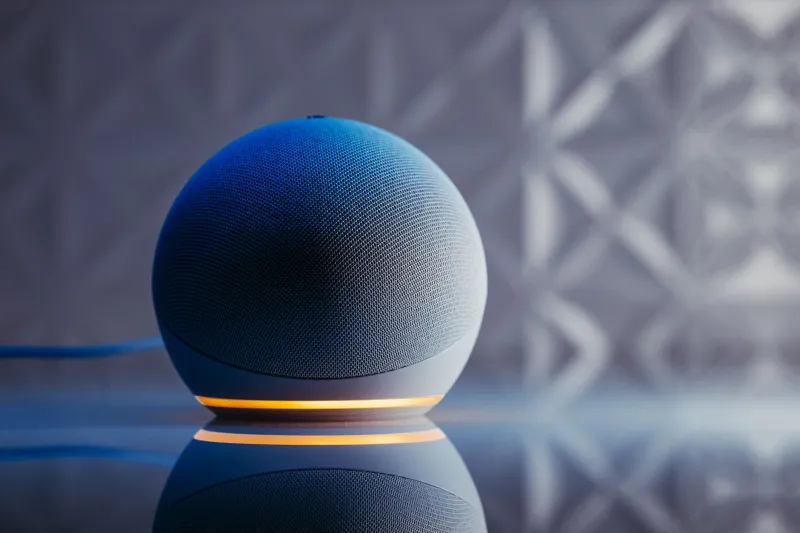
Something woke Jennifer Calloway up at 2:47 in the morning. Not a sound exactly—more like a presence. Then her Google Nest display in the kitchen lit up on its own, cycling through photos from a family vacation she'd taken years before her mother passed away. No prompt. No voice command. Just the device, doing something it had no obvious reason to do.
"I know what people will say," Jennifer told us. "They'll say it was a software update, or a scheduled routine I forgot about. But I checked. There was nothing scheduled. And the photos it showed—they were all ones my mom had been in."
This kind of story is becoming more common. As smart home technology weaves itself deeper into everyday American life—roughly 60 million U.S. households now have at least one smart speaker—paranormal investigators are confronting a genuinely new challenge. The same devices designed to make life easier are also creating a whole new category of unexplained events. And figuring out what's a Wi-Fi hiccup versus what might be something more is getting complicated.
The New Haunting Landscape
Traditional paranormal investigation relied on a relatively stable set of environmental variables: cold spots, EMF spikes, EVP recordings, unexplained shadows. Smart homes throw a wrench into all of that. A connected thermostat can create a cold spot. A malfunctioning smart bulb produces its own EMF signature. Alexa can—and occasionally does—laugh for no discernible reason, a quirk Amazon has acknowledged and partially patched but never fully explained.
Paranormal investigator Marcus Delray, who operates out of the Dallas-Fort Worth area and has been doing residential investigations for over a decade, says the last three years have fundamentally changed how he approaches a case.
"I used to walk into a house with my equipment and start scanning," he says. "Now the first thing I do is ask for a full inventory of every smart device in the home. Because if I don't account for those, I'm essentially investigating with static in the signal."
Delray developed what he informally calls a "tech audit" protocol—a structured interview and device review that happens before any traditional paranormal investigation begins. He's not alone. Across paranormal investigation communities on Reddit, Discord, and YouTube, similar frameworks are being shared and debated.
Real Cases, Real Confusion
In 2022, a family in suburban Columbus, Ohio, contacted a local investigation group after their Amazon Echo began responding to questions no one had asked—sometimes in the middle of the night, sometimes with answers that felt eerily relevant to recent family conversations. The investigators' initial scan showed elevated EMF readings near the device. Exciting, until they realized the homeowner had installed a new router the week prior and hadn't properly shielded the cable run behind the wall.
That case closed as a technical false positive.
But a separate case in Savannah, Georgia—a city that barely needs more ghost lore—proved harder to explain away. A couple had moved into a pre-Civil War home they'd retrofitted with a full smart home system. Their Ring doorbell began recording motion events at consistent intervals between midnight and 1 a.m., always at the same spot on the front porch. No person, no animal visible in the footage. Just a triggered sensor.
The investigating team ruled out insects (the camera's motion zone had been adjusted), wind-triggered plants (the porch had none), and IR interference. What they did find, using a secondary thermal camera, was a recurring temperature anomaly at the same location—roughly three degrees cooler than the surrounding air—that appeared and dissipated on the same rough schedule. The Ring camera, inadvertently, had been logging something the homeowners hadn't intended to track.
"That's the thing," says Delray. "Smart devices are recording constantly. They're motion-sensitive, sound-sensitive, light-sensitive. They're better passive paranormal monitors than most of the equipment we used to carry. The question is learning how to read what they're capturing."
The Troubleshooting Protocol
So how do you actually tell the difference? Here's the framework that's gaining traction among serious investigators:
Step 1: Document everything with timestamps. When a device does something unexpected, note the exact time. Compare it against your router logs, any scheduled routines, and recent firmware updates. Most smart home apps keep activity logs—use them.
Step 2: Rule out interference sources. Baby monitors, older microwaves, and neighboring Wi-Fi networks can all cause erratic smart device behavior. A simple Wi-Fi analyzer app can tell you a lot about what's competing for signal in your home.
Step 3: Check for corroboration. A single device acting up is almost always technical. Multiple unconnected devices behaving strangely at the same time—especially across different platforms—starts to get interesting. If your Philips Hue lights flicker at the exact moment your Nest thermostat logs an unexplained temperature drop, that's a pattern worth investigating further.
Step 4: Introduce traditional investigative tools. Once you've ruled out the obvious tech explanations, bring in an EMF meter and a thermal camera. Compare readings near active devices against readings in areas of the home with no smart tech. Anomalies that exist independent of device locations carry more weight.
Step 5: Look for meaning. This one's harder to quantify, but investigators consistently report it: genuinely unexplained smart home events tend to have a quality of apparent intention. The device doesn't just glitch—it does something that feels relevant to the people living there. That's not scientific evidence, but it's worth noting in your case file.
What It Might Actually Mean
There's a theory gaining quiet traction in paranormal research circles: that spirits—if they exist and interact with the physical world through electromagnetic energy—would naturally gravitate toward smart home devices precisely because those devices are sensitive, always-on, and designed to respond to subtle environmental input. In other words, your Alexa might not be glitching. It might be the most accessible communication tool in the room.
That's a significant leap, and no one in serious investigation circles is claiming it as established fact. But it's a framework that's changing how people approach unexplained events in their own homes.
Jennifer Calloway still isn't sure what happened that night. She had a tech-savvy friend review her Google Nest's entire activity log. Nothing explained the photo slideshow. She's made peace with not knowing.
"Maybe it was a bug," she says. "But it felt like something. And sometimes that's all you have to go on."
In a smart home, that might just be enough to start asking better questions.