It Runs in the Family: The Unsettling Truth About Spirits That Follow Your Bloodline
When Diane Morales started using a popular DNA ancestry service a few years back, she was hoping to fill in some gaps on her father's side of the family—a branch that had gone quiet somewhere in rural Louisiana in the early 1900s. What she found was a great-great-grandmother she'd never heard of, a woman named Celestine who had died young under circumstances the family records described only as "sudden."
Within two weeks of activating her ancestry account, Diane says the dreams started.
"Same woman, every time. Standing at the edge of something—water, I think. Not threatening. Just watching me. Like she was waiting for me to notice her."
Diane isn't alone in connecting a genealogy discovery to what feels like a paranormal experience. Across paranormal forums, Facebook groups, and investigation case files, a pattern keeps surfacing: people who dig into their family history and then begin experiencing unexplained phenomena. Not haunted houses. Haunted bloodlines.
The Theory Behind the Haunting
The idea that spirits attach to family rather than location isn't new—it appears in folk traditions across nearly every culture, from West African ancestor veneration brought to the American South through the slave trade, to the Irish concept of family banshees, to Indigenous American beliefs about ancestral guardians. What's newer is the attempt to examine these traditions through a paranormal research lens and ask whether they point toward something real.
Dr. Loretta Vance, a researcher who has spent years documenting what she calls "lineage-linked apparitions," argues that the existing model of location-based haunting is incomplete.
"We've built most of our investigative frameworks around place," she explains. "The house is haunted. The cemetery is haunted. But a significant portion of the cases I've reviewed don't fit that model. The activity follows the family member, not the address. When they move, whatever is present moves with them."
Vance points to several documented cases where multiple generations of the same family—living in completely different states—reported encounters with the same described apparition. Same clothing. Same approximate appearance. Same behavioral patterns.
What Genealogists Are Noticing
Here's where things get genuinely strange: some professional genealogists are starting to hear these stories from clients, and a few are taking them seriously.
Amy Thurston, a genealogist based in New England who specializes in colonial-era American families, says she's had multiple clients report unusual experiences shortly after significant ancestry discoveries.
"I had a client in Vermont whose family had been in the region since the 1700s," Amy says. "She'd always felt a strong presence in her home—not frightening, just there. When we traced her line back and found a direct ancestor who had died in that same county during King Philip's War, she broke down crying. She said, 'That's who's been with me.'"
Amy is careful not to overstate her own beliefs on the matter. But she acknowledges that the pattern has come up often enough that she now routinely asks clients whether they've experienced anything unusual at home—particularly after receiving significant ancestry results.
"I'm a researcher, not a paranormal investigator," she says. "But I'd be lying if I said I hadn't noticed the correlation."
DNA Sites as Unintentional Haunting Maps
This is the part that raises eyebrows even among skeptics: the possibility that services like AncestryDNA and 23andMe are, inadvertently, helping people locate the spirits that may already be present in their lives.
The logic goes something like this. If ancestral spirits are drawn to their living descendants through some form of energetic or genetic connection, then the act of actively researching that bloodline—naming the dead, acknowledging their existence, seeking them out—could function as a kind of invitation. Not unlike calling out during a paranormal investigation.
"In a lot of traditional belief systems, naming the ancestor is the first step in contact," notes cultural anthropologist and paranormal researcher James Okafor. "You're essentially saying, 'I know who you are. I see you.' Some traditions believe that's all a spirit has been waiting for."
Whether you accept the metaphysical framing or not, the experiential reports are hard to dismiss entirely. Paranormal investigation teams that have begun including genealogy research as part of their pre-investigation process report that it frequently provides context that changes how they interpret activity in a home.
Recognizing an Ancestral Haunting
So how do you know if what you're experiencing might be connected to your family line rather than your address? Investigators and researchers point to a few distinguishing characteristics.
The activity is personal, not environmental. Ancestral hauntings tend to feel directed at specific family members rather than general occupants of a space. Visitors to the home rarely experience anything. The phenomena seem to track with the individual.
There's a recurring presence, not random activity. Rather than varied phenomena—different sounds, different locations—ancestral hauntings often feature a consistent apparition or energy signature. Same presence, same qualities, over years or even decades.
Family members across different households share experiences. If your sister in Phoenix and your cousin in Atlanta are describing the same presence independently, that's a significant data point. Location-based hauntings don't behave that way.
The activity intensifies around genealogical discovery. Multiple people report that experiences escalate when they begin actively researching their family history—as if the act of searching draws something closer.
What You Can Do With This
If any of this resonates with your own experience, paranormal researchers suggest a few approaches. Start with documentation: write down what you've experienced and when, and cross-reference it with any genealogy research you've done. Look for temporal connections.
If you're comfortable with it, some investigators recommend direct acknowledgment—speaking aloud to the presence, using the ancestor's name if you know it, and expressing that you're aware of them. In many traditional frameworks, recognition itself is a form of resolution.
And if the experiences feel distressing rather than benign, that's worth taking seriously. Not every ancestral connection is a peaceful one. Family histories carry trauma, and some researchers believe that unresolved events—violent deaths, broken relationships, secrets kept too long—can create the kind of energetic disturbance that reaches across generations.
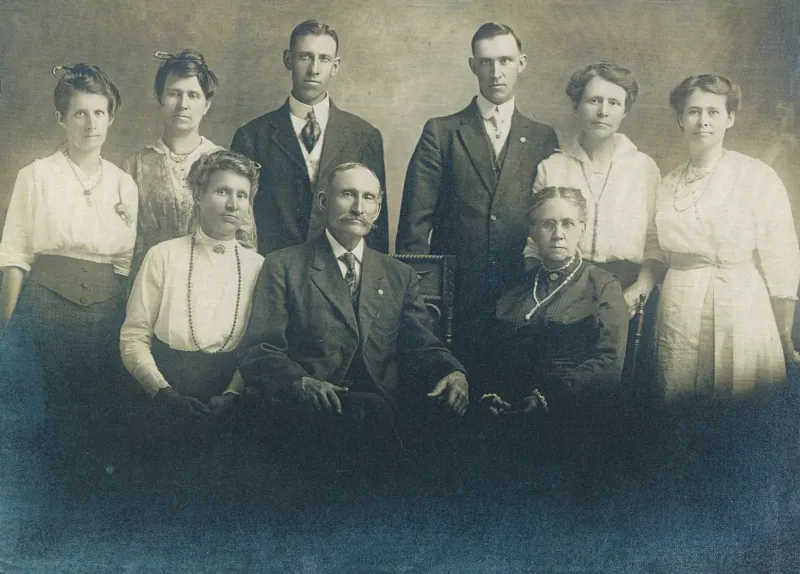
Diane Morales eventually found a photograph of Celestine through a distant cousin she connected with through the ancestry site. She printed it out and put it in a frame.
"The dreams stopped after that," she says. "I think she just wanted to be remembered."
Maybe that's all any of them want.