Cursed Keepsakes: How to Tell If That Family Heirloom Came With an Unwanted Spiritual Attachment
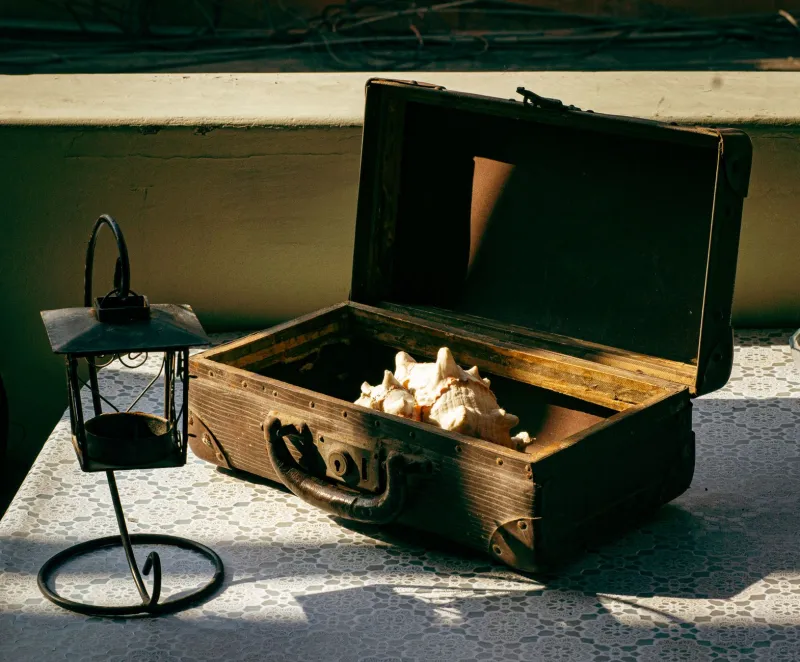
Most of us have that one object. Maybe it's a rocking chair that sat in your grandmother's bedroom for forty years. A ring that passed through three generations before landing on your finger. A painting that's been in the family so long nobody remembers who made it or where it originally came from. These objects carry history. They carry memory. And according to paranormal investigators across the country, sometimes they carry something else entirely.
Inherited hauntings — the transmission of supernatural attachments through family property, real estate, or personal items — represent one of the most commonly reported and least discussed categories of paranormal experience. Unlike a haunted location you can simply leave, inherited attachments follow you. They move when you move. They wait.
Here's what investigators and researchers say you need to know.
1. The Disturbance Began Right After the Inheritance
Timing is everything in paranormal investigation, and the single most telling sign of an inherited attachment is a clean before-and-after. If strange things started happening in your home shortly after you brought in a new piece of inherited property — or after you moved into a family member's former residence — that's not a coincidence investigators are willing to dismiss.
This doesn't mean every creak and flicker after moving into your late aunt's house is supernatural. But a pattern of disturbances — recurring sounds, objects moving, electronics behaving strangely, pets acting agitated near a specific item — that began precisely when a new object arrived is worth paying attention to.
Paranormal investigator Renee Castillo, based in Texas and active in the field for fifteen years, describes a case she worked involving a vintage vanity mirror passed down through a family after the matriarch's death. "The daughter who inherited it started seeing reflections that didn't match the room within the first week," Castillo recalls. "She thought she was going crazy. But the timing was undeniable."
2. The Object Has a History of Emotional Intensity
Objects don't absorb just any energy. The prevailing theory among paranormal researchers — sometimes called the psychometric or residual energy model — holds that items exposed to repeated, intense emotional experiences over long periods of time can become saturated with that energy in ways that outlast the people who generated it.
This is why certain categories of inherited objects show up in haunting reports far more often than others:
- Bedroom furniture, particularly beds and mirrors, where people spent years of their most vulnerable moments
- Jewelry, especially rings and lockets worn daily for decades
- Religious or ritual objects that held deep personal significance
- Handmade items — quilts, carved furniture, hand-written letters — where the maker's focus and intention were concentrated
- Objects present at a death, whether a deathbed, a chair in which someone passed, or items held in final hours
The more emotionally charged the object's history, the more likely investigators say it is to carry residual energy — or to serve as an anchor for an entity that was attached to it.
3. You Feel Differently Around One Specific Item
Not all inherited attachments announce themselves dramatically. Some are subtle. A persistent low-level unease. A reluctance to enter a specific room. An inexplicable sadness or anxiety that doesn't correspond to anything in your own life but seems to concentrate near one particular object.
Sensitive individuals — and even people who don't consider themselves particularly intuitive — often report a distinct emotional shift when in proximity to an attached object. Children and pets tend to be especially reliable indicators here. If your dog refuses to go near the inherited armchair or your kid keeps asking who the person standing near the old bookcase is, those aren't observations to brush off.
"Kids and animals don't have the social filter that tells them to rationalize what they're experiencing," says Castillo. "They just react to what's actually there."
4. The Activity Is Concentrated, Not Diffuse
One way to distinguish an object-based attachment from a location-based haunting is to pay attention to where the activity concentrates. A location haunting tends to be tied to specific areas of a building — a particular staircase, a room, a basement. An inherited object attachment follows the object.
If you've rearranged your home and the disturbances shifted to the new location of a specific piece of furniture, that's a significant tell. Investigators sometimes deliberately move suspected objects to different parts of a home during investigations to see if the activity relocates with them. It often does.
5. Family Members Had Experiences With It Too
Inherited attachments frequently have a paper trail, even if nobody talked about it openly. When investigators ask families about an object's history, they often discover that previous owners had their own unexplained experiences — they just never connected the dots, or felt too embarrassed to say anything.
If you can, ask. Talk to relatives who knew the previous owner. Ask if anyone ever felt uncomfortable around the item. You might be surprised how many people were waiting for someone else to bring it up first.
What Paranormal Investigators Actually Recommend
If you've checked several of these boxes and you're genuinely concerned, here's what experienced investigators suggest as practical first steps:
Document everything first. Before doing anything else, keep a log of disturbances — dates, times, locations, what happened. This creates a baseline and helps investigators if you bring one in.
Isolate the suspected object. Move it to a garage, storage unit, or another space outside your main living area and see if the activity diminishes. This is one of the simplest and most informative tests you can run on your own.
Research the object's history. The more you understand about what an object witnessed, the better equipped you are to address it. Family records, obituaries, and conversations with older relatives can fill in critical gaps.
Consider a cleansing. Practices vary widely depending on cultural background and personal belief — smudging with sage or palo santo, prayer, salt, or working with a spiritual practitioner from your own tradition are all approaches investigators have seen yield results. There's no universal method, but intentionality and consistency matter.
Bring in a professional if needed. A reputable paranormal investigator can help assess whether what you're experiencing is object-based, location-based, or something else entirely — and can recommend next steps accordingly.
The Hardest Question
Sometimes, after all of this, the question investigators get asked most often is the one nobody really wants to answer: do I have to get rid of it?
Not necessarily. Many investigators and spiritual practitioners believe that attachments can be addressed without discarding the object — that the connection can be acknowledged, the energy cleared, and the item kept safely. But they're also honest that some objects, for whatever reason, don't cleanse easily. And at some point, sentimental value has to be weighed against what's actually happening in your home.
Your grandmother loved you. The thing she left behind might not.